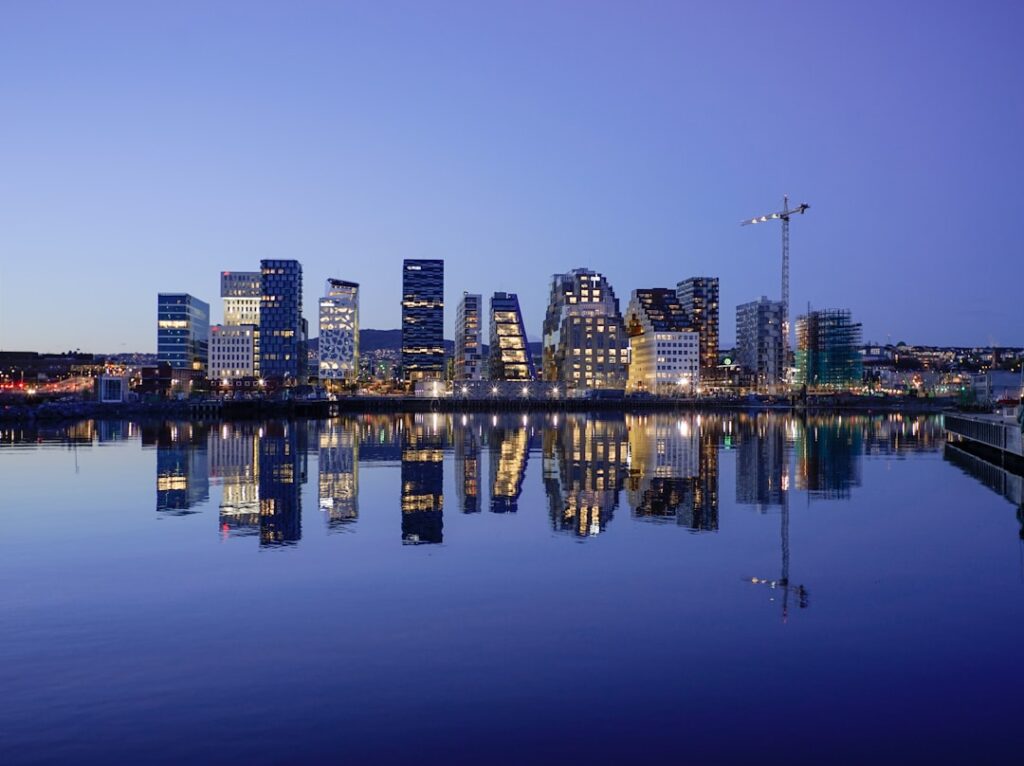






Introduction: Compact, connected Oslo — traveling without a car
Oslo, Norway’s capital nestled between wooded hills and the calm waters of the Skagerrak, is a city perfectly suited to car-free travel. Whether you have just a few hours between fjord cruises or a full week to explore, the combination of public transport, ferries, bike lanes and walkable streets makes getting around practical, affordable and often more enjoyable than driving. This comprehensive guide explains how to move from neighborhood to neighborhood, walk down from the Aker Brygge quays to the museums on Bygdøy, take the train from the airport, and make the most of active alternatives like bike-share or hiking the city’s hills.
The core network is run by Ruter (Oslo and regional public transport), which coordinates the metro (T-bane), trams (Trikk), buses, local ferries and suburban rail. On top of that are private and semi-private services: Flytoget (the Airport Express Train) for a fast run to Oslo Central Station, shuttle boats to the islands and fjord, taxis and ride-hailing apps, plus shared mobility solutions. Knowing the main stations, quays and stops, their exact addresses, operating windows and prices will help you save time and money.
In this guide you’ll find practical, detailed information: full addresses like Oslo Sentralstasjon (Jernbanetorget 1, 0154 Oslo) or Oslo Lufthavn (Edvard Munchs veg 1, 2061 Gardermoen), fares converted to euros for easy comparison, typical schedules, immersive route descriptions, and locals’ tips to avoid lines and find secret viewpoints. We’ll also recommend the best ways to catch the ferry to the Bygdøy museums (Kon-Tiki Museum, Bygdøyveien 36, 0286 Oslo; Viking Ship Museum, Huk Aveny 35, 0287 Oslo) or cycle up to Vigeland Park. Each section outlines the best options depending on time of day, weather and your priorities — speed, budget or scenery.
Throughout this guide you’ll learn to read signs, buy tickets via the Ruter app or ticket machines, take advantage of day and weekly passes, and easily combine multiple modes of transport — for example Flytoget from the airport, a day of trams and ferries, then an evening stroll around Aker Brygge and Grünerløkka. We’ll include visual cues and image markers to help you picture each spot, and share local advice — where to store bags, which quays to use early in the morning, how to avoid crowds on fjord trips, and how to get around when Scandinavian weather turns chilly. Get ready to discover Oslo differently: car-free, slower but deeper, with vistas unfolding at every stop.
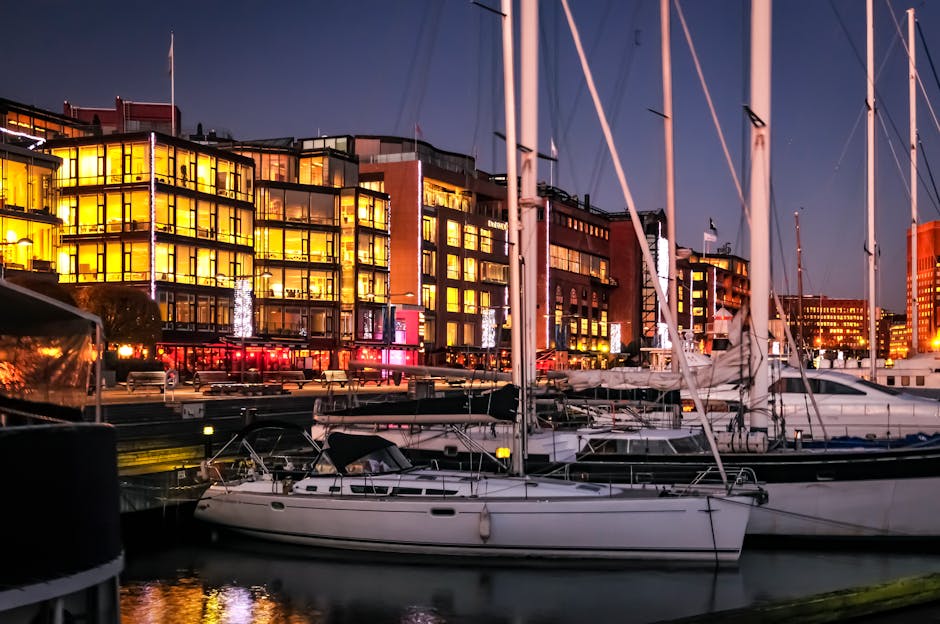
Getting around downtown: metro (T-bane), tram (Trikk) and bus — understanding the network
Central Oslo is served by a dense, reliable network. The main hub is Oslo Sentralstasjon (Oslo S), at Jernbanetorget 1, 0154 Oslo — a multimodal interchange connected to most metro lines, regional trains and buses. From Oslo S you can reach top attractions in 10–20 minutes: the Opera House (Kirsten Flagstads Plass 1, 0150 Oslo) is a 15-minute walk, Aker Brygge (Bryggetorget 3, 0250 Oslo) about 10 minutes, and Vigeland Park (Nobels gate 32, 0268 Oslo) by tram or metro. Key stations to remember are Nationaltheatret (Johanne Dybwads plass 1, 0250 Oslo) for theatre and shopping access, and Jernbanetorget for major connections.
Hours and frequency: most T-bane lines run from around 05:00 until roughly 00:30 on weekdays, with peak periods every 4–7 minutes. Trams (Trikk) and buses typically operate from 05:00 to 01:00; on weekend nights, night buses cover main routes but with reduced frequency. Exact times are available on the Ruter app or on station displays. Trains and trams show upcoming departures in real time on platform screens.
Fares and tickets: the system is zoned. For most tourist visits in central Oslo and along the fjord, Zone 1 is sufficient. Approximate fares in euros: single ticket Zone 1 (adult) ≈ €3.50 (40 NOK); 24-hour ticket Zone 1 ≈ €10.50 (115 NOK); 7-day ticket Zone 1 ≈ €29.50 (325 NOK). Buy tickets via the Ruter app, at station ticket machines (cards accepted) or at kiosks. Validation is mandatory: if you buy a paper ticket or SMS ticket, validate it in the station machines or present the mobile ticket if asked. Failure to do so can result in fines.
Practical tips:
- Buy via the Ruter app: it shows optimal routes, real-time departures and lets you store day passes. Essential if you switch transport modes often.
- Use contactless bank cards: many machines and validators accept contactless payment or Apple/Google Pay — handy for a one-off trip without buying tickets in advance.
- Avoid rush hour (07:00–09:00 and 15:30–17:30) if possible, especially if you have luggage.
- Find stations with elevators if you’re pushing a stroller or carrying heavy suitcases: Nationaltheatret and Oslo S have accessible facilities.

From the airport to downtown and beyond: trains, shuttles and practical fares
Arriving at Oslo Lufthavn Gardermoen (Edvard Munchs veg 1, 2061 Gardermoen) means choosing between speed and savings. Two main rail options serve the airport: Flytoget (Airport Express Train) and Vy regional trains. Flytoget is the fastest: about 19 minutes to Oslo Sentralstasjon (Oslo S), with departures every 10–20 minutes. Approximate price: one-way ≈ €19.50 (215 NOK). Vy regional trains take roughly 23–30 minutes to Oslo S and are more economical at about €9.50 (105 NOK) for a standard ticket.
Schedules: Flytoget runs early morning until late at night, with first departures around 04:30 and last trains near 01:00, and a high daytime frequency. Vy offers frequent services throughout the day; some trains are direct while others make stops. For families or groups, weigh Flytoget’s comfort and speed against Vy’s lower price. Flybussen coaches also run to different parts of Oslo and cost approximately €10–€12 (110–130 NOK) depending on destination.
Taxi and ride-hailing options: official taxis wait at the airport. Approximate fare to the city center (Aker Brygge/Oslo S): €45–€60 (500–650 NOK) depending on traffic and time of day. The trip takes 35–50 minutes depending on traffic. Ride-hailing apps (Uber, Bolt) operate here but are rarely much cheaper than traditional taxis for airport runs, so compare before you confirm.
Arrival tips:
- Think about luggage: Flytoget has dedicated luggage space; Vy and coaches have compartments but with less room.
- Buy your ticket before boarding: for Flytoget, use the ticket machines or their website/app; for Vy, the Vy ticketing options and app are convenient.
- If you plan multiple trips, buy a Ruter 24-hour or 7-day Pass for Zone 1; it covers metro, tram, bus and local ferries (within the zone).
- Carry some change: cards are preferred, but some buses or small stations may expect exact payment.

Ferries and fjord trips: quays, Bygdøy museums and local cruises
The Oslofjord is a major draw, and the most pleasant way to explore it is by boat. Local ferries leave mainly from Aker Brygge (Bryggetorget 3, 0250 Oslo) and the Oslo harbor. To reach the Bygdøy museums (Kon-Tiki Museum, Bygdøyveien 36, 0286 Oslo; Viking Ship Museum, Huk Aveny 35, 0287 Oslo; Fram Museum, Bygdøynesveien 39, 0286 Oslo), take Ruter ferry route 91 from Aker Brygge — a 10–15 minute ride with great views of the Opera House and Akershus Fortress. Approximate fare: single Zone 1 ticket ≈ €3.50 (40 NOK), often included with a Ruter pass. Ferries typically operate frequently from 09:00–18:00 in season (lower frequencies off-season).
For longer fjord excursions (island hopping, panoramic mini-cruises), private companies like Oslo Fjordcruise offer 1–3 hour tours. Prices roughly range from €20–€45 (220–500 NOK) depending on duration and service (commentary, drinks). Departures are usually from Aker Brygge, sometimes from Pier 3 in the city center. For a more intimate experience, choose a small-boat tour with a guide that takes you deeper into the fjord to spot picturesque villas, tiny islands and local wildlife (birds, occasional seals). Book ahead in high season (June–August).
Museum visits on Bygdøy:
- Kon-Tiki Museum — Bygdøyveien 36, 0286 Oslo. Typical hours: 10:00–17:00 (varies off-season). Indicative fare: €12–€14 (130–150 NOK).
- Viking Ship Museum — Huk Aveny 35, 0287 Oslo. Hours: 10:00–17:00 (seasonal). Indicative fare: €10–€12 (110–130 NOK).
- Fram Museum — Bygdøynesveien 39, 0286 Oslo. Hours: 10:00–17:00. Indicative fare: €12–€15 (130–160 NOK).
Fjord tips:
- Pick the right quay: Aker Brygge has several piers; for Bygdøy head to the Aker Brygge pier — Bryggetorget 3. Signs will show line 91.
- Golden hour and weather: morning and late afternoon light are best for photos. The fjord can feel chilly even in summer; bring a windproof layer.
- Combine routes: ferry + bike is a great combo — disembark at Bygdøy and rent a bike to circle the coast and visit several museums in half a day.
- Combined tickets: some tours bundle transfers and museum entry, useful if you’re short on time.
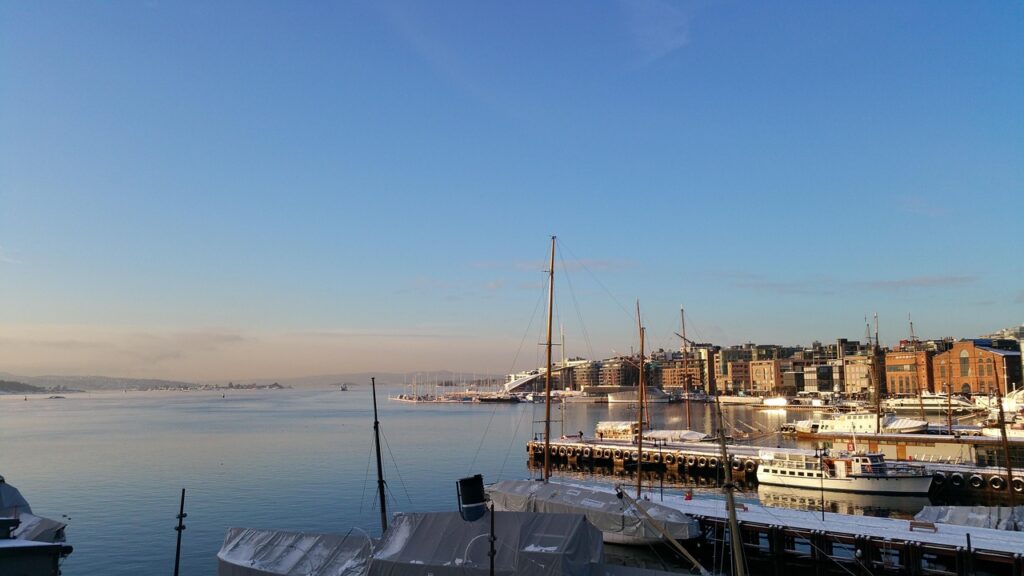
Bikes, e-scooters and active getting around: explore Oslo on two wheels or on foot
Oslo is well-suited to active travel. An extensive network of bike lanes, urban parks (Frognerparken, Ekebergparken) and coastal paths makes it enjoyable to get around without a car. The public bike-share is called Oslo Bysykkel and has hundreds of stations, notably near Oslo Sentralstasjon, Aker Brygge and in Grünerløkka. Useful addresses: main station at Jernbanetorget 6 (near Oslo S); Aker Brygge station at Bryggetorget 3. Approximate fares: daily pass ≈ €9.00 (99 NOK) for unlimited 30-minute rides (then a per-minute charge), with weekly/annual options for residents.
E-scooters: several operators (VOI, Tier, Lime at various times) provide dockless e-scooters. Typical pricing: unlock ≈ €1.00 (10–15 NOK) + €0.15–€0.25 per minute. Scooters are handy for short trips in the center but follow the rules: speed limits, no riding on pedestrian sidewalks, and park only in designated zones.
Walking: Oslo is exceptionally walkable. Central districts (Karl Johans gate, Akershus Fortress, Aker Brygge, Tjuvholmen) are compact and pleasant for exploring on foot. The surrounding hills (Ekebergparken, Holmenkollen) demand more effort but reward you with spectacular views. A recommended walking route: start at Oslo Sentralstasjon (Jernbanetorget 1), stroll down Karl Johans gate toward the Royal Palace (Slottsplassen 1), then head to Vigeland Park (Nobels gate 32) for an art-filled visit, then take a tram or bike back down along the fjord.
Safety and comfort tips:
- Wear a helmet: for bikes or scooters, helmets are strongly recommended even if not always mandatory.
- Check the weather: the fjord wind can be strong; a windbreaker is essential for cycling trips.
- Parking rules: lock bikes to designated racks and don’t block sidewalks; for scooters, leave them in marked zones or by a post.
- Recommended routes: the walk between Aker Brygge and Tjuvholmen is ideal for photos, while Ekebergparken offers sculptures and elevated city views.

Practical tips, budgets and local tricks to optimize your trips
Planning and apps: the Ruter app is your number-one companion. Buy tickets, view multimodal journeys (metro + ferry + tram), and track departures in real time. Also download Vy for regional trains and Flytoget for the Airport Express. Google Maps works well for walking routes, but the local apps often provide more accurate timing info during disruptions.
Indicative budget for 3 days in Oslo (transport only):
- Single ticket (Zone 1): ≈ €3.50 (40 NOK)
- 24h pass (Zone 1): ≈ €10.50 (115 NOK)
- 7-day pass (Zone 1): ≈ €29.50 (325 NOK)
- Flytoget (Airport–city): ≈ €19.50 one-way (215 NOK)
- Vy train (Airport–city): ≈ €9.50 one-way (105 NOK)
- Ferry to Bygdøy: ≈ €3.50 one-way (40 NOK), often included with a pass
- Bike-share (day): ≈ €9.00 (99 NOK) for a day
Local tips:
- Skip the car in the center: parking is expensive and scarce; favor the T-bane/trikk or walking.
- Off-peak for the fjord: for photos with fewer people, catch the ferry early (departures from 09:00). Afternoons in summer are very busy.
- Dine after 20:00: public transport still runs but frequencies drop; check the last tram departures. Taxis are a safe late-night option but cost more.
- Respect waste sorting and cleanliness: Norwegians care about the environment; use bins and avoid littering on the quays.
- Discount cards: if you’re a student or senior, check for possible discounts through Ruter/Vy.
Dealing with disruptions: in case of strikes or storms, the Ruter and Vy apps post updates. Station staff and information kiosks at Oslo S or Nationaltheatret can help with alternatives. If you carry bulky luggage, note that some stations (Oslo S) offer paid lockers — prices vary, often around €4–€8 (40–80 NOK) for a few hours.
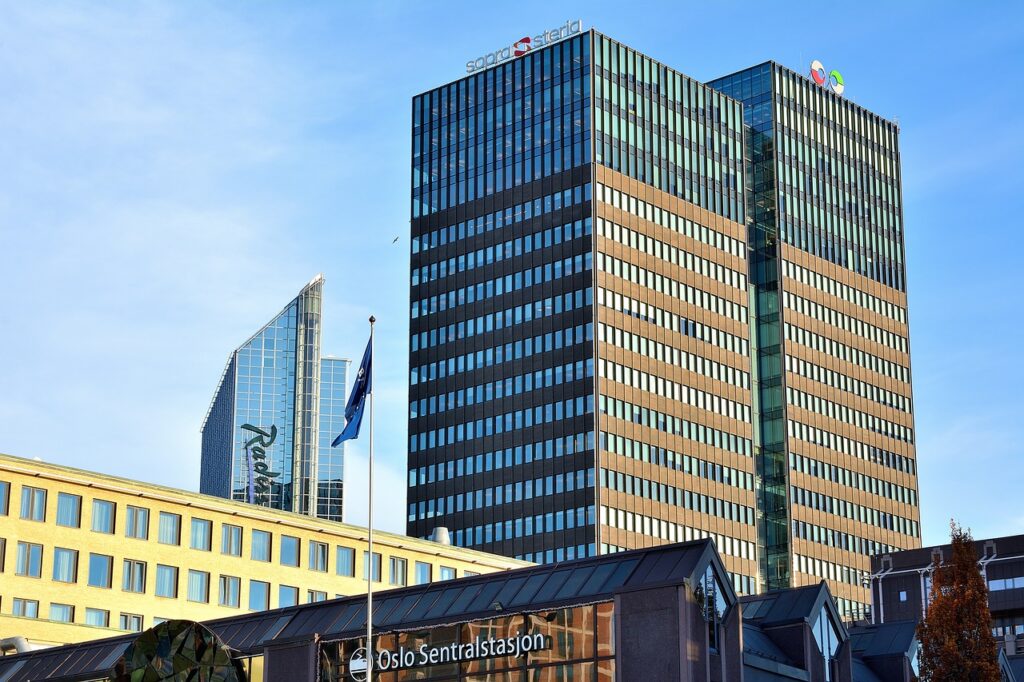
Conclusion: choose smart mobility in Oslo
Getting around Oslo without a car is both easy and rewarding. The integrated metro network (T-bane, tram, bus), complemented by welcoming ferries, fast trains from the airport and active options like cycling or walking, lets you cover every interest — Bygdøy’s museums, fjord-side promenades, urban strolls in Grünerløkka or evenings by the water. Fares stay reasonable if you choose day or weekly passes; fast services (Flytoget) are handy for saving time on arrival or departure.
Plan ahead: download Ruter and Vy, check schedules and pick the right pass for the length of your stay. In the city, prefer multimodal solutions: a quick T-bane ride in the morning, a walking or cycling trip in the afternoon, then a ferry to enjoy the fjord at sunset. The practical addresses in this guide — Oslo Sentralstasjon (Jernbanetorget 1), Aker Brygge (Bryggetorget 3), Bygdøy museums (Bygdøyveien 36 / Huk Aveny 35) — will help you orient and plan coherent routes.
Finally, embrace the local mindset: queue respectfully, respect the environment, and adapt to the weather. Oslo without a car isn’t just a limitation — it’s a way to experience the city more slowly, more photogenicly and often more richly. You’ll discover unexpected viewpoints, meet locals, and reach corners harder to access by car. Have a great trip and enjoy every journey — in Oslo, every ride is an opportunity to see Norway differently.